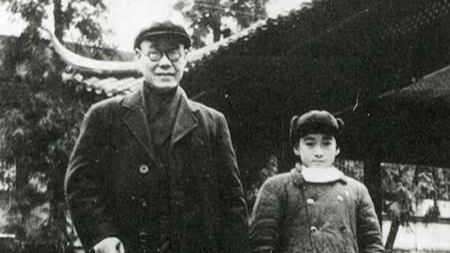
Pan Tianshou
Introduction
Pan Tianshou (1897-1971) was a renowned Chinese painter, art educator, and cultural innovator who played a pivotal role in revitalizing traditional Chinese ink painting during the 20th century. Known for his distinctive style that combined scholarly elegance with grandeur and robustness, Pan's works often featured motifs such as rigid mountain rocks, wildflowers, and eagles. His artistic philosophy emphasized strength, persistence, and cultural confidence, which he infused into his creations and teachings. As one of the four great masters of 20th-century Chinese painting, Pan Tianshou's contributions to art and education have left an indelible mark on China's cultural heritage.
Early Life and Education
Pan Tianshou was born in Zhejiang province in 1897. Growing up in an environment rich in traditional Chinese culture, he developed an early interest in painting and calligraphy. His formative years were marked by a dedication to mastering the techniques and philosophies of classical Chinese art. Pan's education laid the foundation for his later innovations, as he absorbed the strengths of ancient painters while cultivating his own unique style. His belief in the importance of innovation in art was evident from the beginning, as he sought to break away from mere imitation and establish a distinctive artistic identity.
Artistic Career
Painting Style and Techniques
Pan Tianshou's artistic style is characterized by a robust and majestic aesthetic that combines traditional Chinese ink painting techniques with innovative approaches. He often revisited the motif of rigid mountain rocks, which became a signature element of his work. These rocks not only served as compositional anchors but also symbolized strength and persistence, reflecting Pan's own character and artistic philosophy. He softened the hard edges of these rocks by incorporating blossoms, wildflowers, and animals, creating a harmonious balance between rigidity and elegance.
Pan's brushwork was influenced by the vigor of Southern Song Dynasty ink painting and the robustness of the Zhe School, yet he discarded their bluntness and rigidity to develop a style that was uniquely his own. His works often featured tenacious pine trees, ferocious eagles, and clusters of wild grass, arranged in irregular yet aesthetically pleasing compositions. This approach demonstrated his ability to blend traditional techniques with modern sensibilities, ensuring the relevance of Chinese ink painting in a rapidly changing cultural landscape.
Major Works
Pan Tianshou's oeuvre includes several iconic pieces that exemplify his artistic philosophy and technical mastery. Among his most celebrated works are "Everlasting Glory," a monumental 6-meter-long piece from 1964, and "Flowers in Yandang Mountain," "Spring Drizzle in Regions South of the Yangtze River," and "Misty Rain and Croak of Frogs." "Everlasting Glory," created for the 15th anniversary of the founding of the People's Republic of China, features three eagles standing on a massive rock and another perched in a pine tree, symbolizing strength and resilience. Other pieces highlight Pan's fascination with the landscapes of Yandang Mountain, which he visited multiple times between 1955 and 1963. The mountain's rugged terrain and wild flora provided inspiration for some of his most innovative compositions, blending natural beauty with artistic expression.
Teaching and Influence
Pan Tianshou was not only a master painter but also a dedicated educator who devoted half a century to modern art education in China. In 1928, he was appointed as a professor of traditional Chinese painting at the National Academy of Art (now the China Academy of Art) in Hangzhou. He later served as the institution's president for two tenures, during which he championed the revival of Chinese ink painting and its cultural significance.
Pan's teaching philosophy emphasized the importance of cultural confidence and innovation. He encouraged his students to explore new creative possibilities while remaining rooted in traditional techniques. His influence extended to generations of artists, including acclaimed Chinese-French abstract painter Zao Wou-ki. Pan's commitment to education ensured that the legacy of Chinese ink painting continued to thrive in the modern era.
Legacy
Pan Tianshou's legacy is defined by his contributions to the revival and modernization of Chinese ink painting. At a time when traditional art faced a decline due to the chaos of the early 20th century and the rise of Western painting, Pan's works and teachings reaffirmed the value of Chinese cultural heritage. His distinctive style and innovative approach to composition and brushwork breathed new life into the flower-and-bird painting genre, which had been criticized for its lack of momentum and appeal.
Pan's influence extends beyond his artistic achievements. His dedication to cultural preservation and education has inspired countless artists and educators to uphold the traditions of Chinese art while embracing modernity. Exhibitions commemorating his work, such as the 120th anniversary of his birth, continue to celebrate his contributions to art and culture.
Honors and Recognition
Pan Tianshou's contributions to art and education have earned him widespread recognition and acclaim. He is celebrated as one of the four great masters of 20th-century Chinese painting, alongside Li Keran, Huang Binhong, and Fu Baoshi. His works are highly sought after in auctions, often fetching tens of millions of yuan, reflecting their enduring value and significance.
Exhibitions dedicated to Pan's life and work, such as "Ethos and Fortitude," have showcased his artistic achievements and cultural impact. These events highlight his role as a pioneer in the revival of Chinese ink painting and his commitment to fostering cultural confidence. Pan Tianshou's legacy continues to resonate, inspiring artists and scholars to explore the rich traditions of Chinese art while embracing innovation and creativity.








